
There is a particular kind of confidence that comes with seeing a campground spigot marked as potable water. You connect the hose, turn the tap, and get on with your trip.
Then, a few days later, the shower starts smelling strange. There are white marks around the faucet. Your drinking water tastes different, or the filter you installed recently already looks filthy.
The problem is not necessarily that the campground has “bad” water. It is that campground water can change dramatically from one stop to another. One park may use treated municipal water, while another relies on a private well containing more sediment, iron, sulfur, or hardness minerals.
This is one reason RV Water Filter Store is useful for people who travel regularly. The question is not simply whether you have a water filter. It is whether your setup makes sense for the water you are actually using.
The surprise often comes after a few campgrounds
Imagine spending a week at a campground where the water is perfectly acceptable. It tastes normal, your fixtures stay clean, and there is no noticeable smell.
At the next park, you use exactly the same setup.
Within days, the water has a metallic taste and your sink starts developing orange marks.
That can happen because campground wells may contain dissolved iron or manganese. In other locations, the biggest nuisance might be sand and silt. Municipal supplies create their own issues, including chlorine taste and sediment picked up through older pipes.
Experienced RV travelers eventually realize that changing campsites can also mean changing water conditions.
A basic RV water filter might be perfectly adequate for one location and less suitable for another. This does not mean you need to rebuild your entire system every time you travel. It does mean paying attention when the water starts behaving differently.
Your RV usually gives you clues
Water problems are surprisingly good at leaving evidence.
White crust around showerheads and faucets can point toward hard water. Orange or brown staining may indicate iron. Cloudiness or visible particles can suggest sediment. A strong chemical taste may be associated with treated water, while a rotten-egg odor can occur with hydrogen sulfide in some well-water supplies.
The mistake is assuming one filter cartridge handles all of these problems.
It doesn’t.
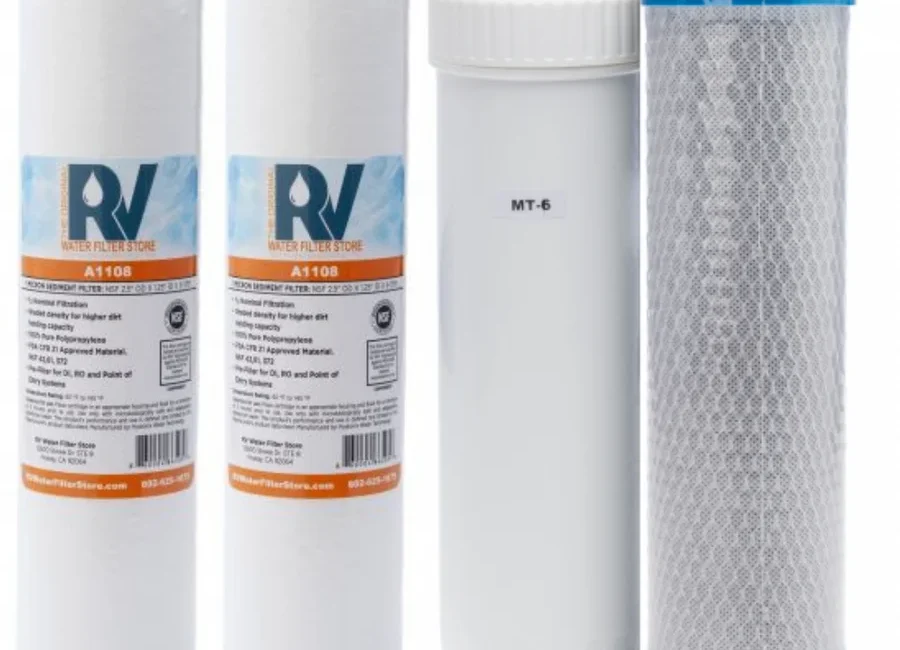
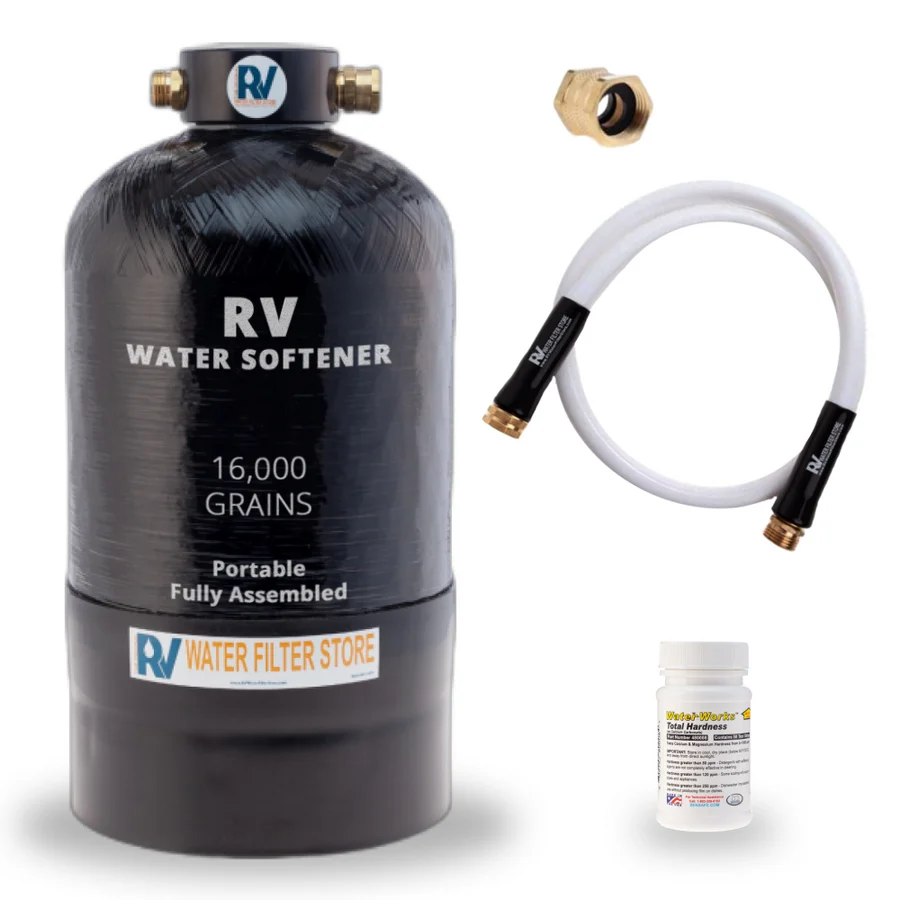
Sediment filtration is designed to catch particles such as sand, silt and rust. Carbon filtration is commonly used to reduce chlorine, unpleasant tastes and odors. Hard water requires a different approach because ordinary sediment and carbon filters do not meaningfully remove the dissolved calcium and magnesium responsible for hardness.
RV Water Filter Store reflects this distinction with different filtration and treatment options rather than treating every water issue as the same problem.
The cheap filter can become expensive in a different way
A small inline filter hanging from the campground hose is certainly better than ignoring filtration altogether, but RV owners should understand its limitations.
Water is not only going into your drinking glass. It is moving through faucets, valves, the shower, water heater and other parts of the RV plumbing system.
Sediment can clog components, while hard water can gradually create mineral scale. That means water treatment is partly about what you drink and partly about protecting the equipment you travel with.
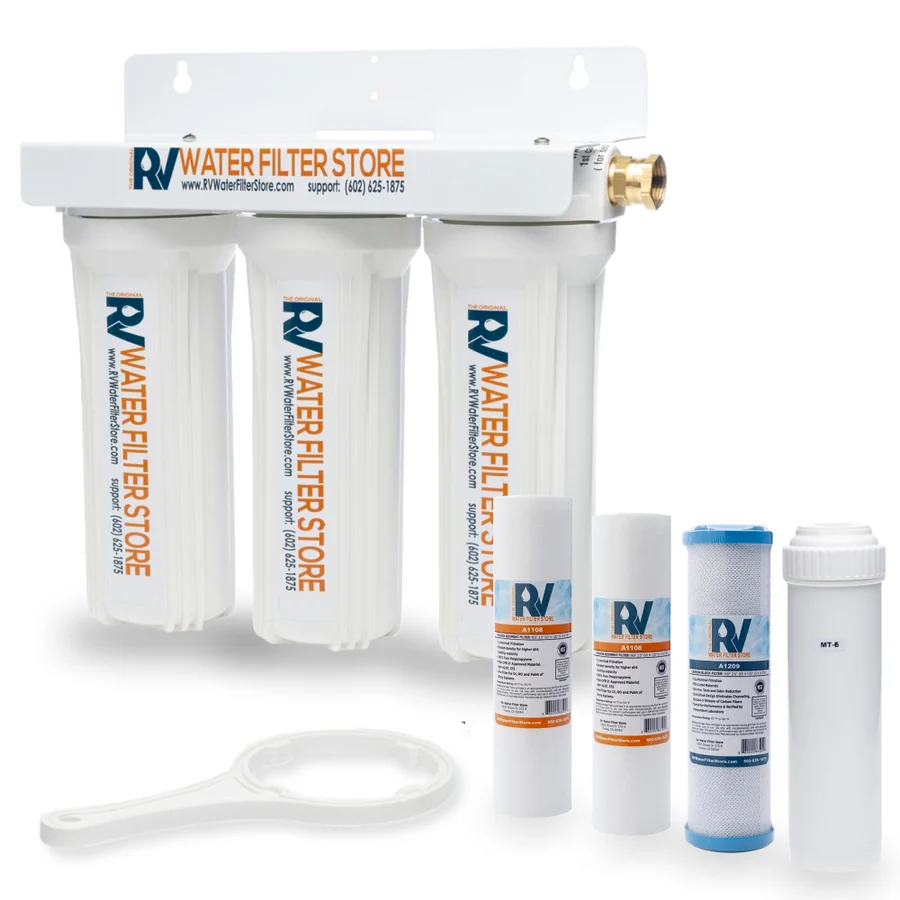
For everyday filtration, RV Water Filter Store offers multi-stage systems that separate the jobs. Its Essential system, for example, uses a sediment stage followed by a carbon block designed to reduce chlorine, taste and odor.
That staged design makes practical sense. Catch the dirt first, then let the next filter deal with what it was designed to handle.
A better five-minute campground habit
Before automatically connecting your RV water hose at a new campground, spend a few minutes checking the situation.
Ask whether the park uses municipal or well water. Look at the spigot before connecting. Let the water run briefly and notice unusual color or odor. If you travel frequently, keeping simple water testing supplies onboard can also help identify hardness and other water characteristics.
Then consider your setup.
A typical connection can place the pressure regulator first, followed by sediment and carbon filtration, with water softening added when required. RV Water Filter Store recommends treating water before it enters the RV so sediment and other unwanted material are dealt with before reaching internal plumbing.
That small habit is far easier than dealing with clogged fixtures or stubborn mineral deposits later.
Good filtration starts with knowing what you are trying to fix
Buying the most complicated system available is not automatically the answer.
Someone who mostly stays at campgrounds supplied by treated city water may care primarily about sediment, chlorine, taste and odor. An RVer spending months at well-fed rural sites could encounter very different concerns. If water is consistently hard, adding appropriate scale treatment or an RV water softener may matter more than simply installing another sediment cartridge.
For questionable water sources, especially when there are concerns that cannot be identified by sight, taste or smell, proper water testing becomes more important. A filter should never be treated as proof that an unknown water source is safe.
This is where RV Water Filter Store gets the bigger idea right: filtration should match the problem.
The campground water issue most travelers learn too late is not that every campground has terrible water. It is that the water at each campground can be different.
Once you expect that variation, you start paying attention before connecting the hose. And that simple change can make life on the road much easier.