

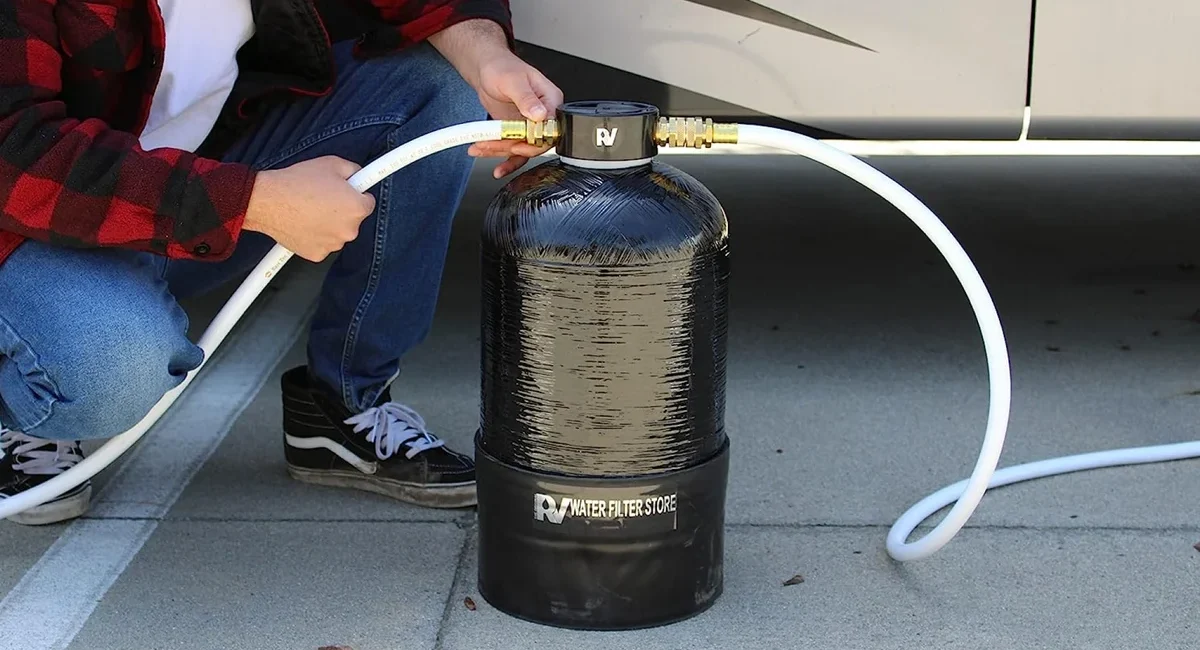
You pull into a campground after a long drive, level the RV, connect the power, attach the water hose, and finally settle in. The water coming from the campground spigot looks perfectly clear, so there is not much reason to think twice about it.
Except clear water does not tell you very much.
Depending on where you are staying, that water may have travelled through municipal pipes, an older campground plumbing system, or a private well before reaching your hose. One stop might give you heavily chlorinated water. At the next, you could notice sediment, iron, an odd smell, or enough minerals to leave white deposits around the shower.
This is why RV Water Filter Store takes a more practical approach to RV water. Instead of treating every campground water supply as if it were identical, it makes more sense to understand what is actually entering your rig and choose filtration accordingly.
Clear water can still cause problems
Some water problems announce themselves immediately. Turn on the tap and you might smell chlorine or sulfur. Fill a glass and you may notice an unpleasant taste. Sediment can sometimes make the water look cloudy or leave visible particles behind.
Other issues are much quieter.
Hard water, for example, can look completely normal. The calcium and magnesium in it may eventually contribute to scale around faucets, showerheads, plumbing components, and the water heater. Dissolved metals can also be difficult to identify simply by looking at a glass of water.
That distinction matters when choosing an RV water filter.
A basic sediment filter has a useful job, but it cannot solve every water problem. Carbon filtration can improve chlorine taste and odor, while different filtration media may be needed for concerns such as iron and other metals. Hardness is another issue again, and proper water softening works differently from ordinary filtration.
One useful thing about RV Water Filter Store is that its systems are organized around these different water concerns rather than pretending that a single cartridge is the answer to everything.
Your last campground tells you very little about the next one
This is probably the biggest adjustment for people who start travelling more frequently.
At home, your water source stays fairly consistent. In an RV, you can change water sources several times in a month.
A developed campground connected to city water may mainly leave you dealing with chlorine, occasional sediment, and taste. Move to a rural park using well water and the situation can change. Well water may contain more sediment, iron, manganese, sulfur compounds, or hardness minerals depending on local conditions.
That variability is a good reason to pay attention to your RV water system rather than simply connecting the hose and forgetting about it.
If something suddenly changes, such as the smell, taste, color, water pressure, or amount of scale appearing around fixtures, investigate it. For unfamiliar or questionable sources, proper water testing can tell you far more than appearance alone.
Think in stages, not just filters
There is a reason more complete RV filtration setups use multiple stages.
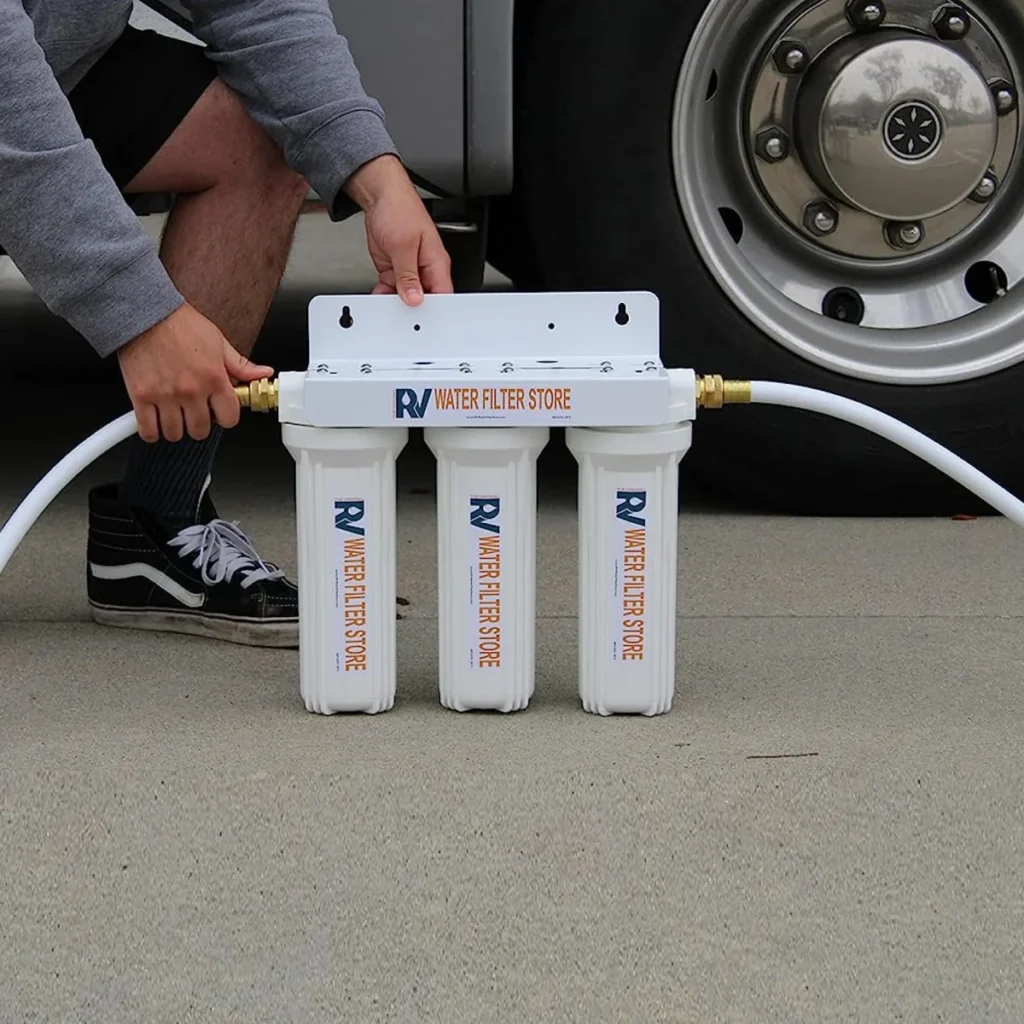
The first stage can catch sediment such as sand, silt, dirt, and rust before it travels farther into the system. A carbon stage can then deal with concerns such as chlorine, unpleasant taste, and odor. Specialty filtration can be added when the water presents a more specific problem.
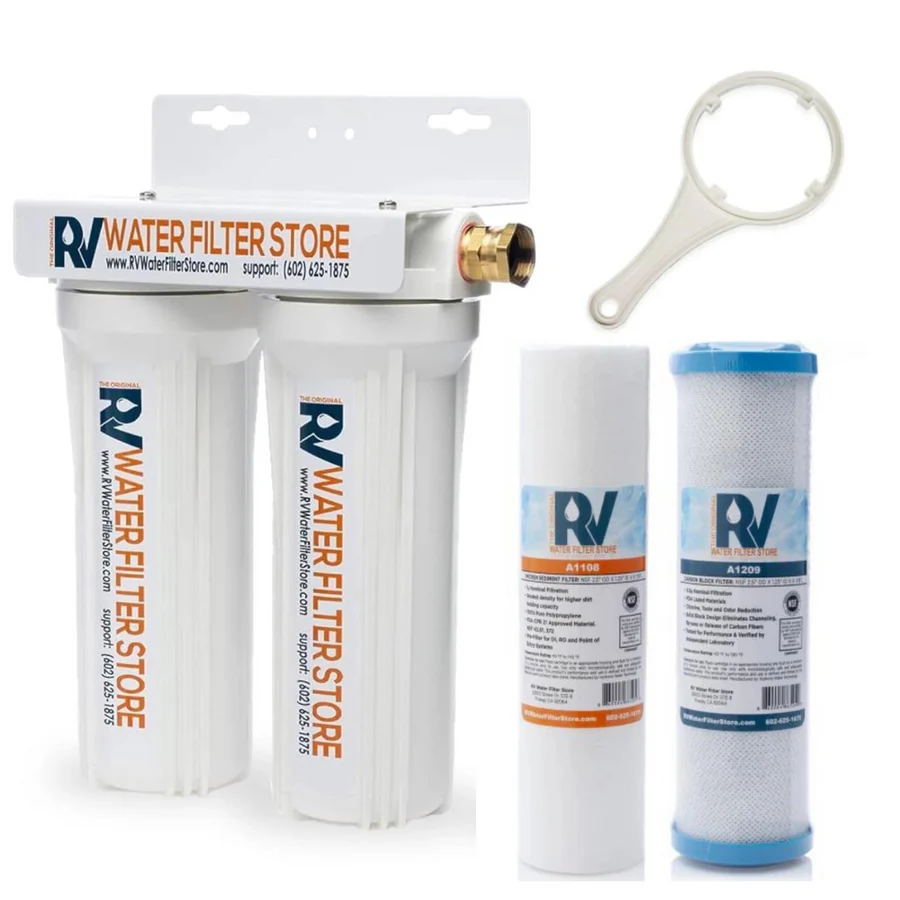
For example, RV Water Filter Store offers a two-stage Essential system using a 1-micron sediment stage followed by a 0.5-micron carbon block. Its Enhanced options are designed for concerns such as scale or iron and heavy metals, while higher-protection systems are available for RVers dealing with more questionable water sources.
This staged approach also helps protect your RV plumbing. Catching grit before it reaches faucets, valves, and other components is much better than discovering it after something starts clogging.
Hard water deserves its own conversation
If you regularly see chalky white deposits around faucets or showerheads, simply buying a finer filter may not fix the problem.
Hardness comes mainly from dissolved calcium and magnesium. Standard sediment and carbon filters do not meaningfully remove those minerals. A portable water softener is designed specifically for hardness, while anti-scale treatment can help reduce scale formation without actually softening the water.
This is an important distinction because RV owners can spend money replacing filters while wondering why the scale keeps returning.
RV Water Filter Store carries both filtration and water treatment options, so you can build the setup around the problem you actually have rather than expecting one product to handle everything.
Pay attention to what your RV is telling you
You do not need to become a water treatment expert every time you park somewhere new.
You just need to notice changes.
A sudden metallic taste, orange staining, rotten-egg smell, rapidly clogging cartridge, unusual sediment, or new scale buildup can all be clues that your current water source differs from the previous one. If the source is unknown or there is a genuine safety concern, testing is the sensible next step rather than trying to diagnose water quality by taste or smell alone.
The useful lesson from RV Water Filter Store is simple: RV water filtration works better when you stop thinking of “campground water” as one type of water.
Every new connection brings a different source into your RV. Understanding what is coming through that hose helps you choose the right filtration, protect your plumbing, and enjoy water that tastes and feels a lot more like something you actually want to use.